

With design and engineering being a constantly developing society, the position of a CAD (Computer-Aided Design) Designer remains to be acknowledged as a foundation of creative and accurate advancement. A CAD Designer applies professional software to design drawings, models, and layouts needed for multiple projects in any field. At present, CAD Designers are essential to industries ranging from architecture to product manufacturing, automotive, and aerospace industries. The skill of 3D modeling enables us to solve design issues, depict large ideas, and create accurate particular models which are crucial when working in product design and architecture to create effective and eco-friendly products and constructions. This article focuses on CAD designers, their working basics, tools available, employment prospects, and what one needs to achieve success in CAD design.
Understanding CAD Designing
CAD (Computer-Aided Design) has revolutionized the concept of designing and designing developmental activities for many uses. CAD designing involves the use of computers and manufacturing software to create functional models of certain products, their design, and the development of 2D and 3D designs. This technology enhances the designer’s ability to develop, shape, and experiment with designs envisioning them as real before physical implementation.
A Brief Overview of CAD Designer
A CAD (Computer-Aided Design) designer is an individual who can design tools with the use of CAD and draw technical and graphic documents such as layouts and designs of various projects in both 2D and 3D. They are significant in organizations that require accuracy and speed in the production of their products like engineering, architecture, and the manufacturing industries. CAD designers can be credited for the conversion of ideas into tangible digital representations whose execution results in a reduction in the number of mistakes that occur in producing a particular object.
Moreover, CAD designing has also evolved from a career mainly in the construction design industry to assisting in a plethora of other industries such as healthcare facilities, media, and fashion. Advanced CAD software enables design professionals to do a virtual run-through of the designs in order to determine if they meet safety and quality standards. CAD designers are at the center of product creation and new product development throughout the required field as well as other engineering sectors.
Types of CAD Designers
CAD designers are professionals who focus on using complex software in order to design detailed drawings and models for particular sectors and purposes. Its specificity is that each type of CAD designer deals with different fields of activity and, therefore, has different tasks and learning outcomes. CAD designers have risen to become very relevant in determining the shapes, forms, and structures of products, buildings, machines, and systems. Here are the most common specialists, along with their specializations in the use of CAD systems.
Mechanical CAD Designers
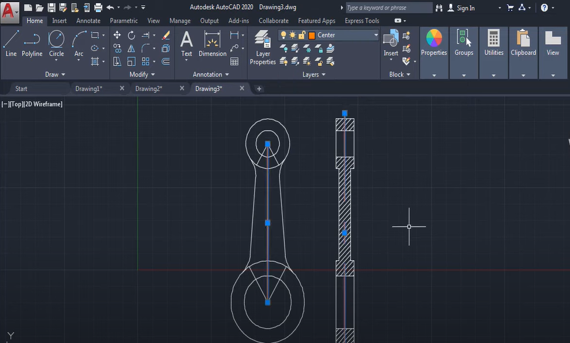
Mechanical CAD designers are focused on designing system and component mechanical schematics. They create accurate 2D plans and 3D prototypes of equipment, instruments, and components like machinery, tools, and mechanical things. They are employed in the manufacturing business, automobile, and aviation fields. Their specialism is in specifying finished goods to satisfy functional and performance concerns and identifying efficiency cost-efficient solutions.
Comparison of free 3D and 2D architectural CAD software programs [2024 edition]
Architectural CAD Designers

Architectural CAD designers are expected to design the layouts of the building together with the structures and also the interior spaces of the building. Almost all designs and layouts are drawn using Computer-Aided Design or CAD software to create elaborate designs that include detailed blueprints in the form of 3-D models and floor plans. Their area of specialization is in the area of residential or commercial and industrial buildings, especially structural and space management, design, and beauty.
Electrical CAD Designers
Electrical CAD designers are responsible for laying down electrical designs and they work on schematics, wiring diagrams, and circuit diagrams. They operate in electronic firms, energy, and construction sectors for assessment if systems provide standards of safety and operations. It entails its application in electrical configuration specifically in the area of efficiency and reliability as well as shaping future advanced technology and structures.
Industrial Product CAD Designers
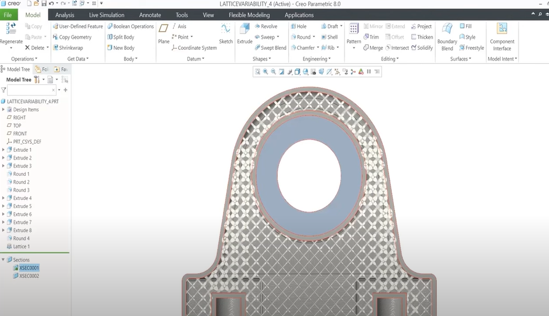
Industrial product CAD designers’ targets involve the production of consumer and industrial products which are used around the house and in industries. The responsibilities of such personnel include conceiving of prototypes, observing ergonomic features, and improving manufacturing efficiency. These designers are in direct coordination with the product engineers & manufacturers to design functional, aesthetic and commercial products.
Other Types of CAD Designers
The above-mentioned types are only a few classes of CAD designers, but their functions go to other numerous specialized industries. Their versatility depends on the needs and demands of a specific industry because every industry have different needs and demands.
- Civil CAD Designers help to develop layouts for roads, bridges, and infrastructure.
- Marine CAD Designers help to design ships, submarines, and offshore structures.
- Fashion CAD Designers help to create garment patterns and fabric simulations.
- Healthcare CAD Designers help to design medical devices and prosthetics.
- Animation CAD Designers help to develop 3D characters and environments for films and games.
| Type of CAD Designer | Primary Responsibilities | Industries/Applications |
| Mechanical CAD Designers | Design mechanical schematics, 2D/3D prototypes of equipment and tools. | Manufacturing, Automotive, Aviation |
| Architectural CAD Designers | Create layouts for buildings and interior spaces with 3D models. | Residential, Commercial, and Industrial Architecture |
| Electrical CAD Designers | Develop schematics, wiring, and circuit diagrams for electrical systems. | Electronics, Energy, Construction |
| Industrial Product CAD Designers | Focus on prototypes, ergonomics, and manufacturing efficiency. | Consumer Products, Industrial Tools |
| Civil CAD Designers | Design layouts for infrastructure like roads and bridges. | Urban Development, Infrastructure Projects |
Key Industries Utilizing CAD Designers

CAD, the process of using an operating computer to facilitate the creation of detailed designs of products and structures, has revolutionized industries. CAD designers are closely involved in converting ideas to work and bringing together technical proficiency and creativity. Every sector from engineering to architecture, entertainment, and healthcare needs their expertise as timeliness and accuracy play a significant role. Now let’s look at some of the major fields or sectors, where CAD designers are bringing innovation to the field.
Architecture and Construction
CAD designers have transformed the construction and architectural fields by providing impressive and precise models for construction and infrastructure. They employ technologies in design, specifically in drafting services where architects create pictures on paper and in PCs which assist them and enable the construction of 2D and 3D models of the designed projects. They enable the architect to plan the layout, select spaces, and choose fabrics while making sure that any project designed falls within the social, economic, and ecological requirements. CAD designers are also involved in real-time changes, which makes them invaluable in today’s construction processes.
Manufacturing
In the manufacturing industry, CAD designers have a central position in the manufacturing and design of products and chain solutions. They create very elaborate models for manufacturing equipment tools and other consumer goods perfect for manufacturing. They make it possible to prototype, cutting out errors and sparing production lines from unnecessary consumption. In this way, they help engineers achieve more rational, unique, and market-oriented solutions for improving total productivity and quality.
Aerospace and Automotive

The aerospace and automotive industries mostly depend on CAD designers for high-performance vehicles and airplanes. CAD designers are also involved with all aspects of design and development from finesse-specific parts to being knowledgeable of the safety compliance requirements. They often collaborate with engineers to make 3D modeling and simulation of a structure or models for strength and efficiency testing before it goes into production. This means that they enable industries to save considerable resources and time when delivering excellent quality products.
Entertainment and Media
CAD designers have brought a radical change to sectors such as entertainment through sprucing up on animation, video games, special effects, etc. They design detailed and highly realistic models for characters, settings, and objects, allowing for capturing, for the audience, fully realistic feelings. Their input goes as far as helping in the filming by determining sets and most of what is computer generated and imagined.
Other Key Industries
The above-mentioned industries are not the exclusive domain of CAD designers. Industries in various sectors appreciate them because they design futuristic products while handling tasks that require precision.
- In Healthcare CAD designers help design medical devices and prosthetics.
- In the Energy sector CAD designers help in Planning renewable energy systems and power grids.
- Fashion Industries employ CAD designers to develop patterns and prototypes for garments.
- In the Marine Engineering sector CAD designers are essential to Craft ship designs and underwater structures.
- Electronic CAD designers create circuit layouts and hardware models.
The current and future roles of CAD designers involve asserting real values for the growth and development of various industries across the globe.
Essential Skills of a CAD Designer
Being a CAD Designer involves understanding, skill, and thinking in a technical as well as interpersonal approach. Such skills help them to design complex layouts, involve creativity in projects, and efficiently work with many other students to see the concepts come to life.
Technical Skills
Essential technical tools and techniques form the core competencies of any aspiring and professional CAD Designer. A firm grip on CAD programs such as AutoCAD, SolidWorks, CATIA, and Revit is completely essential. All of these programs are unique in the sense that each is designed for use by a specific industry, ranging from mechanical engineering to architectural design. Necessarily, knowledge of the methods of 3D modeling, rendering, and simulation is necessary to create meaningful and sufficiently realistic visualizations. It is as important to keep track of the new versions and improvements of software as the new features might boost the speed and overall result.
Analytical Skills
CAD Designers can approach problems analytically and, at the same time, use their imagination to understand the demands of the design. They are expected to understand intricate aspects of any project, define possible design issues, and suggest proper recommendations. For example, evaluating discontinuities in a structure such as in a building design, or enhancing the efficiency of a part of a vehicle entails careful attention to detail. This analytical approach ensures that designs are not only functional but also meet more and sometimes stricter tests of goodness or being optimal and viable when in a particular context.
Attention to Detail
CAD design often is a process of striving at the product’s design at very detailed levels in which even a minor difference may compromise the success of the project. CAD Designers require conscious awareness that dimensions, tolerances, and materials must be right. Such a level of accuracy is highly important, especially for companies that deal with such sensitive industries as Aerospace or Health care. This gives a thorough method to reduce mistakes and guarantee quality results are achieved.
Creativity and Innovation
CAD Designers frequently have to come up with innovative solutions in order to provide for appearance and functionality of the product. Such everyday situations as creating an attractive and cheap product are creative solutions that involve both creativity and utility. It is this ability to innovate that seeks to set apart great CAD designers and CAD design firms.
Communication Skills
Integrated work is a common feature of constructing CAD projects, hence, there must be communication between CAD designers and engineers. CAD Designers need to be able to explain their ideas verbally or in the form of a report or a meeting. They also keep abreast with the views of the clients and incorporate them into their designs. Effective communication is an important element that improves collaboration among members and enhances the project’s efficiency.
Adaptability
The society is dynamic and so too is the design environment by virtue of emerging technologies and shifting market needs. In other words, today’s successful CAD Designers are always open to changes, which means that they more than willingly implement new skills, tools, approaches, and trends. This flexibility helps them win in a highly competitive market as it enables them to produce working designs each and every time that meet the current market standards.
CAD Designers therefore need to develop these basic skills so that they can perform their tasks, create quality designs, and be valuable in their given industries. They not only make them more effective but also provide them with wide opportunities for career development.
Workflow of a CAD Designer

CAD designing is a consecutive system that involves the conversion of ideas into precise shape designs. There is generally a number of steps in this process starting from the identification of requirements of the project to the provision of the final design. Efficiency for a CAD designer depends on how well the designer handles these stages of the process as a problem-solving process. Here is a simplified guide with regard to the main activities a CAD designer undertakes in their work.
Understanding the Project Requirements
The information gathering is the first step in the entire workflow of the project. CAD designers provide their service in consultation with the clients, engineers, or architects to know the goal, parameters, and restrictions envisaged for the design. This process may involve referring to sketches, concept notes, or technical drawings with regard to the purpose of design. Communicative activities are important in this as the designer has to ensure that the work produced is in harmony with the dictates of the client.
Research and Concept Development
With the requirements defined, the designer carries out data collection to enable the consideration of the utility and appearance of the endeavor. This includes studying materials, structural parameters, design trends or necessary regulatory standards to be complied with. From this research, they are able to design preliminary ideas or layouts by hand or using computer-aided drawing tools. These concepts are afterward developed further to form the basis for the overall design of a certain facility.
Creating Preliminary Designs
Here the CAD designer employs a specific application software to come up with initial working 2D designs or 3D models. The concentration is placed on setting up the fundamental framework, size, and main characteristic parameters. According to what was found the designers will try out various configurations and layouts to determine the most practical one. They are preliminary designs that are taken to clients or other team members for the purpose of comments and approval to proceed to the next step.
Detailed Design and Modeling
Preliminary design being approved, the designer advances to developing a detailed model of their product. This involves detailing such as hierarchical information, relative densities, properties and sizes, and dynamic features like geometric tolerances on the model. For 3D designs, the designers might also use simulation techniques in order to check the performance of this design under different loads, temperatures, or motions. This stage also guarantees that the design is right and very suitable for construction or production.
Collaboration and Review
Cad design requires a great deal of collaboration with other members of a design team. It is then modified by and reviewed with the input of engineers, architects, or project managers where appropriate. There are daily research review meetings to help in the identification of possible problems to arise and the integration of the possible changes. The concept of feedback is incorporated with the aim of effectively taking into consideration all the technical, aesthetic, and functional aspects much as complementary to the design.
Finalization and Documentation
After intensive reviewing and approval of the design, the designer then certifies the model. They create well-organized documents, such as technical prints, material requirements, and mechanism plans. These documents are a roadmap to the implementation of the manufacturer, builder, or any other person of interest regarding the project.
Delivery and Implementation Support
The last process is providing the final design and advocating for the execution of the design. CAD designers may help to guarantee that the concept has been implemented correctly, answering any question or concern that may come up during the development or build process. The process of this step makes it easy to flow from the design phase to the completed product.
Careers and Opportunities in CAD Designing
CAD (Computer-Aided Design) designing field provides numerous employment opportunities regardless of the industry, which is why many people prefer jobs in this area if they like using their creativity and have specific knowledge. Thanks to the new technologies being developed daily, many opportunities are available for skilled CAD designers ranging from the traditional and mostly known jobs to the new ones. CAD designers, whether they are employed traditionally or freelancing from home, perform an important job in molding the profession of design and creating the future.
Career Paths for CAD Designers
There are many careers available to CAD designers since the field offers a large number of available opportunities that can be grouped by industry or by area of focus. Both career tracks have different demands and rewards for the learners. Here are among the most prevalent jobs for CAD designers.
- Mechanical CAD Designer
- Architectural CAD Designer
- Electrical CAD Designer
- Civil CAD Designer
- Industrial Product Designer
- Marine CAD Designer
- Animation and Game Designer
- Healthcare CAD Designer
Emerging Opportunities for CAD Designers
Over time, more and more opportunities for CAD designers arise given the constant progression of technology-driven industries and applications. Such opportunities enable CAD specialists to transverse the creativity and futuristic part including but not limited to
- Sustainable Design Specialist
- Robotics and Automation Designer
- 3D Printing Specialist
- Aerospace CAD Designer
- AI-Integrated CAD Development
- Urban and Smart City Planner
Freelancing and Remote Opportunities
CAD Designers can work with clients who are from all over the world, proclaiming services like product modeling, architecture drafting, and designs. Such flexibility makes CAD designers versatile with the projects that they are assigned to, and it also gives them the leeway to explore different projects while making them relevant due to the possibility of working from anywhere. There is great demand for CAD designing services in all sectors and thereby freelancing in this area is an attractive and wealthy profession.
Emerging Trends in CAD Designing
The use of the latest technologies and the adoption of fresh strategies is a revolution in the CAD industry. Here there are the relevant trends that address the future of this field.
AI and Automation
Artificial intelligence is revolutionizing CAD by streamlining repetitive tasks, enabling The introduction of artificial intelligence is rapidly changing the existing landscape of CAD since it helps to optimize the design workflow and reduce the amount of time required to create designs. The option such as generative design involved using Artificial Intelligence to recommend numerous design solutions taking into consideration certain parameters. In turn, input and processing are decreased by such automation where much of the manual work like modifying dimensions or checking the structural reliability could take over while the designer gets to engage in the creative part of the design.
Sustainability in Design
Sustainability is steadily making its way into the design domain of contemporary architecture. Current CAD systems contain features that allow users to measure carbon impact, part density, and energy consumption. All these features help designers deliver environment-friendly products and structures to support the international objectives of sustainability.
Remote Collaboration
The recent development of cloud-based CAD solutions like Autodesk BIM 360 and Onshape enhances the work from different geographical locations. It eliminates the problem that remote team members can work on the same document at the same time which takes less time than in the case of sharing files and ensuring that their designs will be cohesive. Introducing security features improves work quality, and version control enables stakeholders to contribute to work without distorting data.
Integration with Emerging Technologies
Today there are tendencies to implement real virtual reality technologies in the CAD working environment, augmented reality, and the Internet of Things. Thus, VR and AR technologies help designers navigate virtual spaces with the help of prototypes and detect problems in the design process before the actual realization of a project.
Customization and Personalization
Computer-aided design ‘CAD’ tools are being used to enable greater customization in the wake of product development demands for personalized products and services. House designs may be best explained by parametric modeling since such modeling helps the designers develop flexible prototypes that may be easily modified to fit different clients’ requirements. This tendency is especially observable in such sectors as architecture or design of products, the automobile industry, etc., where customization often increases the value of the end product for a consumer.
Conclusion
In Summary, CAD designers can be found almost in any field starting from architecture and ending with manufacturing, including healthcare and entertainment spheres. Their skillfulness in developing accurate essential designs contributes to the realization of clear concepts to address challenges in porosity, preciseness, and feasibility in developing products and structures. As new methods in engineering go around, CAD Designers have taken a central position in the engineering development process.
CAD Designers are also in high demand since more and more industries require effective solutions for design problems. While entering the field and looking for their first CAD design job, the candidates should continue enhancing their key competencies consisting of technical expertise regarding specific software such as AutoCAD, SolidWorks, and problem/idea solving. Flexibility is also important here and such trends as AI and machine learning integration, green design, and increased use of remote technologies as the basis for future CAD development.
In total, the CAD design career provides a large range of opportunities in different, traditional, and newly emerged occupations. independently CAD designers continue to be among the most crucial people who are leading the way on the future of design and engineering.